


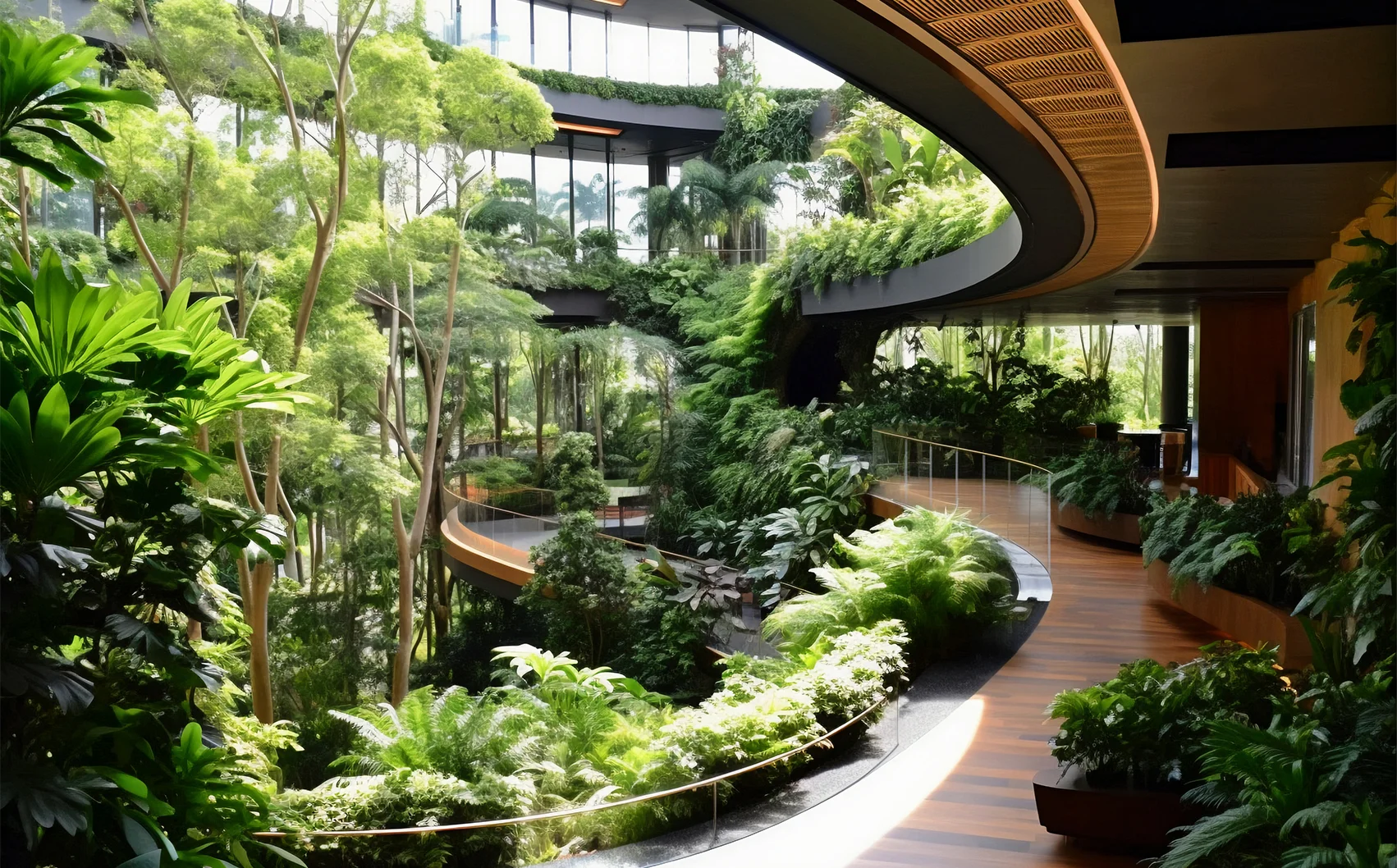
Step into some of Mumbai’s newest premium residences, and a pattern becomes hard to miss: floor-to-ceiling windows framing landscaped gardens, balconies deep enough to serve as an extension of the living room, and towers oriented to let in natural light for most of the day. These aren’t just aesthetic choices; they reflect a deliberate design philosophy taking root across the city’s skyline.
That philosophy is biophilic design, an approach rooted in the idea that people respond positively to nature, and that buildings designed around this connection lead to better living experiences. As luxury apartments in Mumbai increasingly embrace this principle, it’s worth understanding what biophilic design actually means and why it has become such a defining feature of premium homes today.
What Is Biophilic Design?
Biophilic design is an architectural approach that intentionally integrates natural elements, light, organic forms, and meaningful connections to the outdoors within built spaces. The term originates from “biophilia,” a concept describing humans’ inherent need to connect with nature.
What sets it apart from conventional interior design is intent rather than appearance. Traditional design often treats nature as a decorative touch, while biophilic architecture treats this connection as essential to a space’s success, on par with structural stability or natural ventilation. In practice, this can mean deep balconies that support greenery, orientations that maximise daylight, or natural materials like stone and wood instead of synthetic finishes.
The goal isn’t just visual appeal. Homes designed this way aim to genuinely improve how residents feel within the space they live in every day.
Key Elements of Biophilic Design
Successful biophilic interior design relies on a combination of elements working together, rather than any single feature.
| Element | How It Appears in a Home |
| Natural Light | Large windows, east-west orientation, minimal internal walls |
| Indoor Greenery | Planters, vertical gardens, terrace greenery |
| Natural Materials | Stone, wood, bamboo, and other organic textures |
| Water Features | Reflecting pools, indoor fountains, water-adjacent balconies |
| Organic Shapes & Patterns | Curved forms and nature-inspired motifs in design |
| Indoor-Outdoor Continuity | Seamless balcony-to-living-room transitions |
| Visual Connection to Nature | Unobstructed views of gardens, water, or landscapes |
A common misconception is that biophilic design is simply about adding plants. While greenery matters, true biophilic design also depends on light, airflow, material choice, and how spaces visually and physically connect to the outdoors.
Why Are Mumbai’s Luxury Homebuyers Choosing Biophilic Design?
For a city as dense as Mumbai, this shift towards nature-integrated homes reflects a bigger change in what buyers now expect from luxury homes in Mumbai.
Post-pandemic reassessment: Extended time indoors reshaped priorities. Buyers who once accepted compact, inward-facing apartments are now actively seeking more light, greenery, and open sky in their next home.
Wellness as a design fundamental: Wellness is no longer limited to amenities like a gym or pool. It’s increasingly viewed as something embedded into the home itself, through better air quality, natural light, and access to green views.
Space-conscious innovation: Given Mumbai’s spatial constraints, developers are adapting biophilic principles creatively, through vertical gardens, courtyards, atriums, and water features that bring nature into even compact footprints without requiring sprawling plots.
Together, these shifts have moved biophilic design from a niche preference to an expected feature in premium housing.
Biophilic Design and Sustainable Architecture
Biophilic design and sustainable architecture are closely linked, even though they’re often discussed separately. Many of the same elements that connect residents to nature also make homes more environmentally efficient.
Green facades and vertical gardens, for instance, don’t just enhance aesthetics; they also improve air quality and provide natural thermal insulation, reducing dependence on artificial cooling. Similarly, courtyards and atriums that allow cross-ventilation cut down on energy use while creating more comfortable indoor microclimates.
This overlap means sustainable home design isn’t separate from biophilic principles; the two naturally reinforce each other. Homes built with this dual approach in mind tend to be healthier for residents and more efficient to live in over the long run.
Bringing Biophilic Design Into Mumbai Homes
Implementing biophilic design in a city like Mumbai requires thoughtful adaptation to its density and climate, but it doesn’t necessarily demand large spaces.
Deep balconies designed to support plant growth act as a green buffer between indoor and outdoor spaces, while carefully planned courtyards and atriums allow natural light and airflow to reach deeper into a building’s interior. Water features, such as reflecting pools or indoor fountains, add a calming visual and auditory element to common areas.
Even in compact apartments, orientation and window placement can make a meaningful difference. A smaller, well-oriented home with ample natural light and a green-facing balcony can offer a stronger connection to nature than a larger, poorly oriented one. This makes biophilic living genuinely accessible, regardless of apartment size.
Does Biophilic Design Add Long-Term Value?
Beyond everyday comfort, biophilic design offers benefits that extend to wellbeing and long-term investment value.
On the wellness front, research in environmental psychology consistently links access to natural light and greenery with reduced stress, better focus, improved sleep quality, and faster mental recovery from daily fatigue. For homebuyers navigating demanding urban lifestyles, this translates into a home that actively supports better living, not just a pleasant view.
From an investment standpoint, homes with unobstructed green views or strong natural light tend to hold their appeal in the resale market, as buyers increasingly factor these features into long-term liveability. In this sense, biophilic design isn’t just a lifestyle choice; it can meaningfully affect a home’s lasting value.
A Thoughtful Approach to Luxury Living
Biophilic design has moved from being a niche architectural idea to a defining marker of what genuine luxury feels like today, one rooted in comfort, wellbeing, and a real connection to the natural world.
At Sunteck Realty, this philosophy closely aligns with how we approach our developments. Projects like Sunteck Beach Residences reflect these very principles: open layouts, abundant natural light, and landscaped, nature-integrated surroundings that go beyond aesthetics. For us, creating homes that reconnect residents with nature isn’t an added feature; it’s central to how we think about everyday luxury living.
FAQs
1. What is biophilic design in residential architecture?
Biophilic design integrates natural light, greenery, water features, and organic materials into built spaces, intentionally connecting residents with nature to enhance comfort, well-being, and overall living experience.
2. Why is biophilic design becoming popular among luxury homebuyers in Mumbai?
Post-pandemic priorities, growing wellness awareness, and a desire for open, green, light-filled homes have made biophilic design a defining expectation among Mumbai’s luxury homebuyers.
3. How does biophilic design improve everyday living in urban homes?
It brings natural light, fresh air, and greenery into daily life, reducing stress, improving focus, and creating a calmer, more restorative living environment amid dense urban surroundings.
4. What are the key features of biophilic design in luxury apartments?
Key features include floor-to-ceiling windows, deep planter balconies, natural materials, water features, courtyards, and layouts that seamlessly connect indoor and outdoor spaces.
5. How do green spaces and natural light affect homebuyer preferences?
Buyers increasingly prioritise homes with abundant natural light and green views, as these features enhance daily comfort and are seen as valuable for long-term liveability.
6. Why are Mumbai homebuyers looking for nature-inspired residential spaces?
Limited access to greenery in a dense city has made nature-inspired homes highly desirable, offering a sense of calm and openness that’s hard to find elsewhere.
7. How does biophilic design support wellness-focused living?
By incorporating natural light, air quality, and greenery, biophilic design supports better sleep, reduced stress, and improved mental well-being as part of everyday home life.