


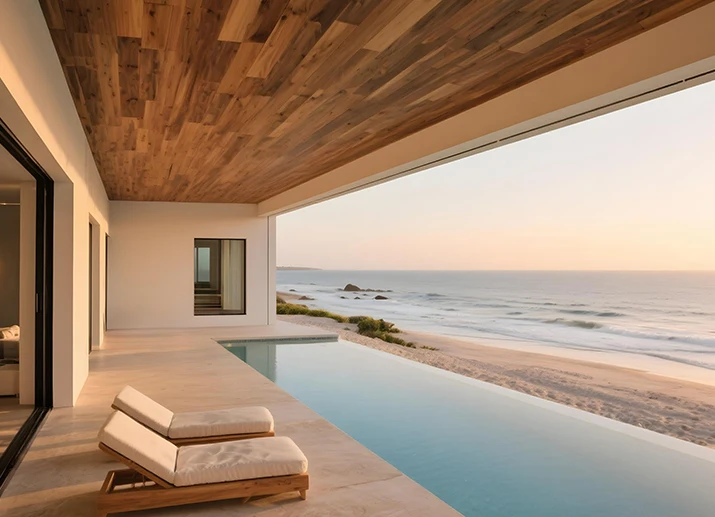
Owning a home with uninterrupted sea views is one of the most sought-after aspirations in Indian real estate. But building near India’s coastline isn’t simply a matter of finding the right plot and getting local approvals; it’s governed by a strict legal framework that can make or break a project, regardless of how promising the location looks.
That legal framework is known as the Coastal Regulation Zone (CRZ), and it’s governed by a specific set of CRZ regulations. Whether you’re evaluating sea facing apartments in Mumbai as a buyer or simply curious about why certain stretches of the coast remain undeveloped, knowing how CRZ rules work explains a great deal about what can be built along Mumbai’s shoreline, and why.
What Is the Coastal Regulation Zone (CRZ)?
The Coastal Regulation Zone (CRZ) was introduced under the Environment Protection Act, 1986, to regulate development activities along India’s coastline. Its core objective is to strike a balance between environmental conservation and responsible construction, protecting fragile ecosystems like mangroves and coral reefs while still allowing for sustainable growth.
Since the first notification in 1991, CRZ regulations have evolved through subsequent amendments in 2011 and 2019, each refining how coastal land is classified and what can be built on it. These notifications divide India’s coastline into distinct zones, each with its own set of permissible and prohibited activities, forming the backbone of how coastal construction is governed today.
Understanding the Different CRZ Zones
CRZ zones in India are classified into four broad categories, each reflecting a different level of ecological sensitivity and existing development.
| Zone | Description | Construction Regulation and Allowances |
| CRZ-I | Ecologically sensitive areas (mangroves, coral reefs, intertidal zones) | Strictly prohibited, except for critical infrastructure |
| CRZ-II | Developed urban areas within municipal limits (parts of Mumbai) | Permitted, subject to FSI norms |
| CRZ-III | Rural/undeveloped coastal areas | Regulated by No Development Zone (NDZ) buffers |
| CRZ-IV | Water areas up to 12 nautical miles | Regulated, focused on fishing and marine activity |
For a city like Mumbai, CRZ-II is particularly relevant, as much of its built-up coastline falls under this category, allowing for regulated redevelopment rather than entirely new construction.
How CRZ Rules Apply to Mumbai’s Coastline
Much of Mumbai’s sea-facing neighbourhoods fall under CRZ-II, since these areas are already developed and lie within municipal limits. Under CRZ rules in Mumbai, this classification permits the redevelopment of existing authorised buildings, old structures, and even slums, provided they comply with local Floor Space Index (FSI) norms.
Over time, certain reclassifications have gradually opened up more land for development. For instance, buffer limits in some areas have been reduced from 500 metres to 100 metres, allowing landward zones to support higher-intensity construction, including luxury housing.
This evolving framework explains why some parts of Mumbai’s coastline have seen significant redevelopment, while others remain tightly restricted.
What Are the Rules for Coastal Construction?
CRZ rules for construction vary depending on the zone, but a few principles apply broadly across Mumbai’s coastline.
In CRZ-II areas, construction is permitted on the landward side of existing roads or authorised structures, within prescribed FSI limits. In CRZ-III zones, which cover more rural or less-developed coastal stretches, the No Development Zone (NDZ) can range from 50 metres to 200 metres from the High Tide Line, depending on local population density.
Regardless of zone, any project near the High Tide Line requires clearance from the Maharashtra Coastal Zone Management Authority (MCZMA), involving environmental impact assessments and documentation that verify the exact distance between the proposed construction and the coastline.
Impact of CRZ Rules on Mumbai’s Real Estate Market
CRZ regulations have a tangible effect on Mumbai’s real estate landscape, particularly in coastal neighbourhoods. By restricting how much land can be developed near the shoreline, these rules naturally limit supply in some of the city’s most desirable locations.
This often translates into longer approval timelines and added compliance costs for developers, expenses that can influence the final pricing of sea facing property in Mumbai. Research studying Mumbai’s coastal wards has also found a measurable link between the extent of CRZ-restricted area and lower property prices in those zones, reflecting how these regulations shape development patterns and land value across the city.
Why CRZ Compliance Matters for Buyers
For buyers eyeing a home near the coast, verifying CRZ compliance isn’t optional; it’s essential. A property that looks perfectly legitimate on paper can still face demolition orders if it violates High Tide Line buffers or lacks the required clearances, regardless of local approvals already obtained.
It’s worth remembering that the High Tide Line is a fixed, surveyed coordinate, not something you can judge by eye during a site visit. Before committing to a purchase, buyers should confirm that the project has valid clearance from the relevant coastal authority and that all documentation aligns with its CRZ classification.
Building Responsibly Along Mumbai’s Coast
CRZ rules, while restrictive in places, play a vital role in ensuring that Mumbai’s coastal growth doesn’t come at the cost of its fragile ecosystems. For buyers, understanding this framework brings welcome clarity to what can otherwise feel like a complex regulatory landscape.
At Sunteck Realty, we take this responsibility seriously. Our coastal developments, including Sunteck Beach Residences, are designed in full compliance with CRZ regulations, allowing us to offer genuine sea-facing living with complete legal and environmental assurance. For us, building responsibly along the coast isn’t a constraint; it’s a commitment we make to every homeowner.
FAQs
What does CRZ mean in Mumbai?
CRZ stands for Coastal Regulation Zone, a set of rules governing development along Mumbai’s coastline to balance environmental protection with sustainable construction.
What are the different CRZ categories under coastal regulations?
CRZ is divided into four categories: CRZ-I (ecologically sensitive), CRZ-II (developed urban areas), CRZ-III (rural/undeveloped areas), and CRZ-IV (water areas).
How do CRZ rules affect construction near Mumbai’s coastline?
CRZ rules restrict the type and extent of construction allowed near the coast, requiring developers to comply with FSI norms, distance buffers, and environmental clearances before building.
Can residential buildings be constructed in CRZ areas?
Yes, particularly in CRZ-II zones covering Mumbai’s developed coastline, where redevelopment and residential construction are permitted subject to FSI regulations.
What is the difference between CRZ-I, CRZ-II, CRZ-III and CRZ-IV?
CRZ-I prohibits construction in ecologically sensitive areas, CRZ-II allows regulated development in urban zones, CRZ-III restricts rural coastal land via NDZ buffers, and CRZ-IV governs water areas.
What approvals are required for construction in a CRZ area?
Projects near the coastline require clearance from the Maharashtra Coastal Zone Management Authority (MCZMA), along with environmental impact assessments and High Tide Line documentation.
Why are CRZ rules important for coastal development in Mumbai?
CRZ rules protect fragile coastal ecosystems from unchecked construction while still allowing regulated, sustainable development in Mumbai’s densely built coastal neighbourhoods.